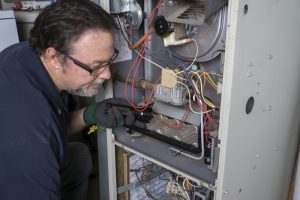
 First, we’ll start off with a bit of good news—if you haven’t scheduled your heating maintenance appointment yet, it’s not too late. Sure, we recommend it in the fall, typically. The reason for this is that it gives you plenty of time to get ahold of a service technician and reduces the risk of an interruption in service. Ensuring that you have your heater maintained at least once a year (twice, if you have a heat pump system) will help it perform at its best, and is more important than what time of the year you have it done.
But you should have it done. The truth is, the biggest and usually the most expensive heating repairs in Westwood, NJ can almost always be prevented with routine tune-ups. It’s during these tune-ups that our pros are able to comprehensively inspect and clean your heating system, make necessary adjustments, and recommend repair needs as we go so that you have plenty of time to get them on your schedule before you need your heater. Skipping or delaying maintenance can lead to a number of heating issues, with two of the most common being a heater that won’t start up, and conversely, a heater that won’t stop running.
Continue Reading
Tags: Heating Repairs, Westwood
Posted in Heating | Comments Off on Poor Heating Maintenance Can Lead to These Problems

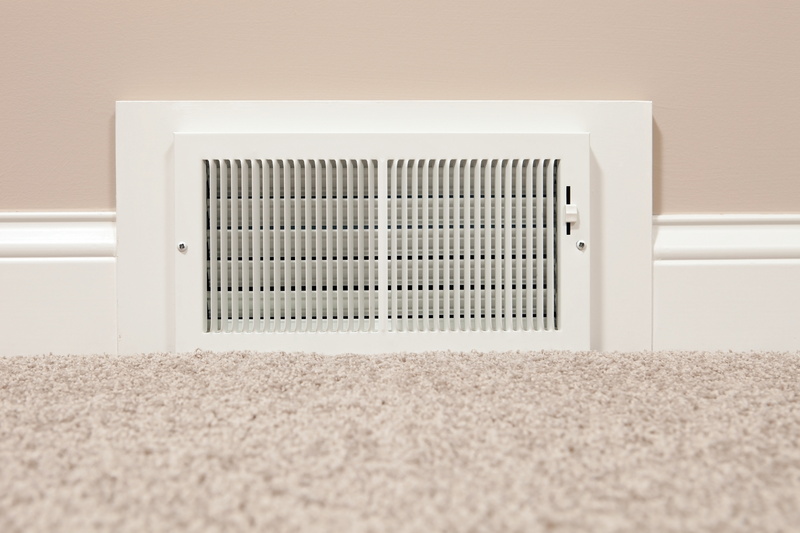 As the warm weather gets underway, we recommend you pay attention to how your air conditioning system is running. If you’ve already scheduled maintenance service for it (and it’s not too late to do so if you haven’t!), the air conditioner will probably run without any problems. Keeping an AC in top-flight condition is a big part of what maintenance is for.
 Did you know that the quality of your indoor air can actually be worse than the outdoor air? This is especially true for humidity. Humidity is something we’re all too familiar with here in the summertime. It’s when there is excessive moisture in the air that it’s harder for us to cool off, since we can’t sweat. High humidity can even cause health problems.
 Springtime is typically when we encourage homeowners to schedule annual maintenance for their air conditioners. This is a season when HVAC technicians usually have less crowded schedules since they’re responding to fewer emergency calls for broken down heaters or air conditioners, and therefore it’s easier to schedule this
 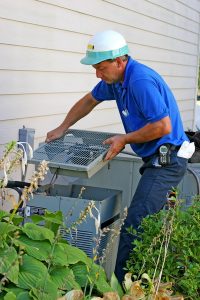 Temperatures are still cool, but with spring officially here now is the time to start preparing for warmer weather. Part of this preparation is scheduling your air conditioning system’s annual maintenance appointment.
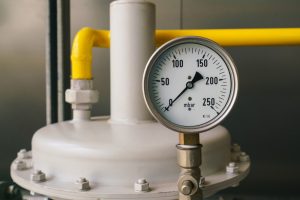 Have you ever been told by a plumbing professional that your boiler has been affected by boiler scale? Another name for it is boiler deposits. You might not be sure whether to take this issue seriously as it’s not blaringly obvious that something is wrong with your boiler. In fact, scaling in boilers is actually common.
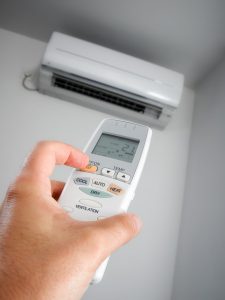 When customers ask us what the best options are for new HVAC systems today, we are quick to suggest ductless heating (and cooling). The reason for this is how efficient and effective these systems are. Rather than operating through a network of air ducts connected to an indoor air handler, like a traditional central air conditioner or furnace, ductless systems have an outdoor unit to which you can connect up to four indoor air handlers. These air handlers are mounted up high on the walls of the rooms in which they are installed, and can be controlled independently of each other.
 Wouldn’t it be nice if you could completely avoid the need for
  A cracked heat exchanger is one of those furnace issues that should not—well, cannot—be ignored. Not only is it something that most often happens to aging furnaces that are just about at the end of their lifespan anyway, a cracked heat exchanger is dangerous. It enables carbon monoxide—a tasteless and odorless, yet hazardous, gas—to make its way into your living space.
 When you live in a climate as cold as ours gets in the wintertime, your heating system goes through a lot of stress. Make that double if you have a heat pump, which is already strained from keeping you cool all summer.